Episode Transcript
[00:00:00] Speaker A: Foreign.
[00:00:07] Speaker B: Welcome to Emotional Sobriety, the next step in Recovery, with Dr. Alan Berger and Tom Rutledge.
[00:00:15] Speaker C: And there's like this band called the Frames that I guess there's.
[00:00:18] Speaker B: This Irish musician was in the Frames,
[00:00:20] Speaker C: and they made a movie called Once, and it was kind of like a.
[00:00:22] Speaker B: A big deal at the time.
[00:00:24] Speaker C: Do you remember that?
[00:00:25] Speaker A: Is it. Are you saying once? Once, like, like in one time.
[00:00:29] Speaker C: My friend showed me this film like a year ago. A really good romantic movie. But anyway, the. The guy died from a motorcycle accident. I guess that was like the.
[00:00:38] Speaker B: In the news today. He's like the main actor from the
[00:00:40] Speaker C: movie, died in a motorcycle accident. And I was like, ah, poor guy. Motorcycles are something I've always kind of felt a romantic connection to, but I know that I can never ride them
[00:00:50] Speaker B: because they're so dangerous.
[00:00:51] Speaker A: My father, when he was much younger, long before I came along, he was.
He was an. Albuquerque, New Mexico. He was a. He was a motorcycle racer. He raced motorcycles. His line was always, you don't crash the motorcycle until. Until you're comfortable driving it.
[00:01:09] Speaker B: Wow.
[00:01:10] Speaker A: You know, he said so don't. You know the moment. The moment you have confidence is like, that's when you're in trouble. And if you think about. That's the truth about most anything.
[00:01:22] Speaker C: I mean, that's the appeal of drugs, really. Like that illusion of having arrived somewhere and that sense of security, you know, that is just total and at least as long as you.
[00:01:32] Speaker B: The load lasts. Yeah. Yeah.
[00:01:33] Speaker A: Like, oh, good, I'm safe here.
[00:01:36] Speaker C: So I thought we'd begin with a nutshell. It's a short one, but I think it's very potent, and Tom sent it to us yesterday. Don't make the mistake of thinking that
[00:01:46] Speaker B: you have no impact in this world of ours. You do.
[00:01:50] Speaker C: So first, first from the author.
[00:01:51] Speaker B: What prompted you to write this as it's so important?
[00:01:55] Speaker A: Early on, I wouldn't have known the relevance to me, but.
But I do know, because you talk to people all the time and it's like. And we just. We. We sell ourselves so short. We listen to those. Those inner critics so much. Sellers are to really. To the point we're thinking that. I mean, it's. I mean, it seems exaggerated, but it's almost like you don't count.
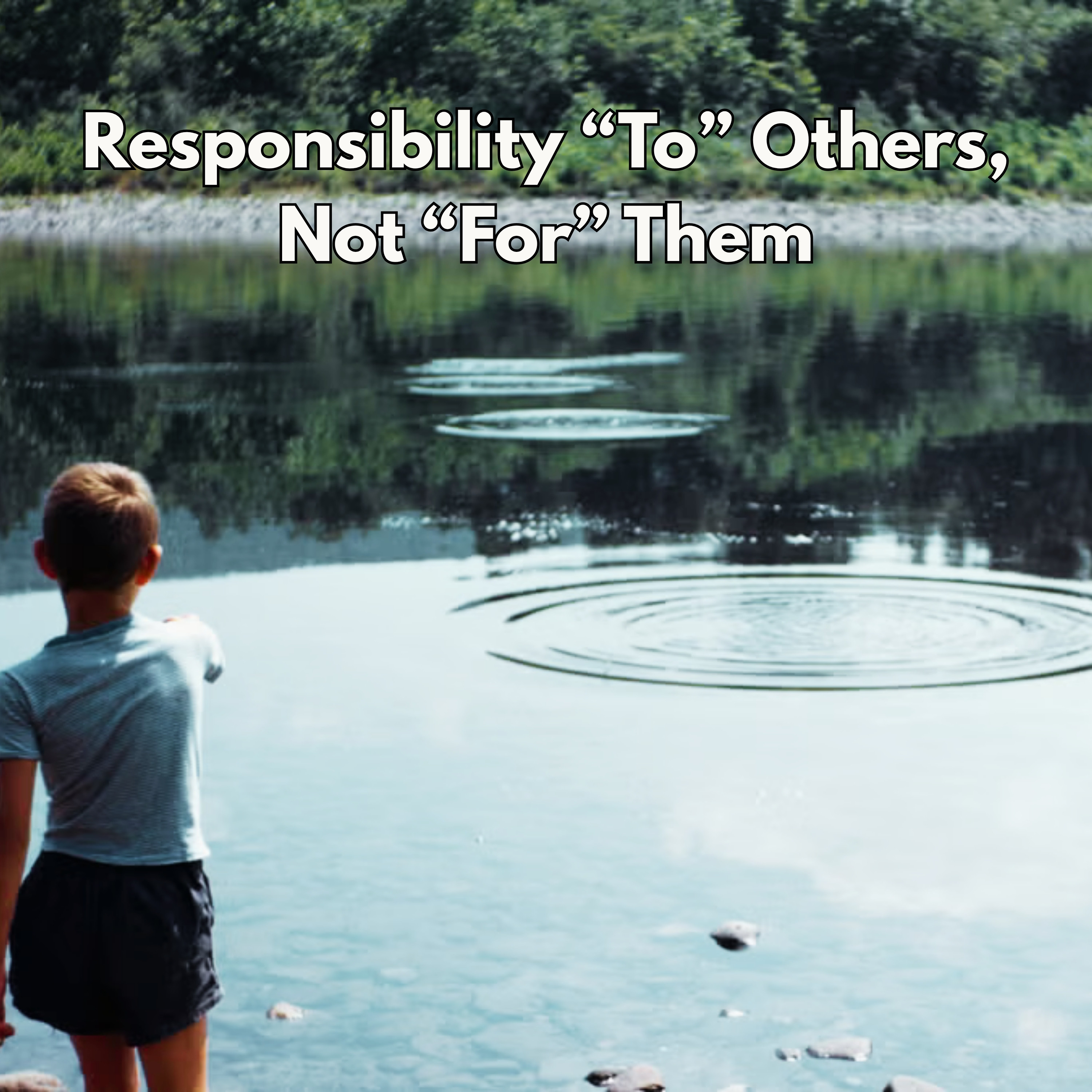
And, And. And it's like. It's like one of the things I've just become aware of in living life is that this. This ripple effect that we talk about so often. It's like we're. It doesn't matter what size pebble we Are. We're a giant rock. We're all leaving ripples in the pond, you know, and we get to choose what kind of ripples we leave.
[00:02:48] Speaker C: Everyone's ripple hits me. You know, like, we. There's a childhood friend that we had.
Me and my friend's group, we got together over the weekend for my friend's bachelor weekend.
And then yesterday in the group text that we were using for the bachelor weekend, my buddy sends a news article that one of our friends who was not present, and then we were actually talking about him. When we all got together, we were just like, I wonder what happened to him.
We were. We were all drug kids, you know, so we were concerned that maybe, like, you know, he.
[00:03:26] Speaker B: His life had taken a negative turn. And it.
[00:03:28] Speaker C: And it turns out he hung himself,
[00:03:29] Speaker B: like, a year ago.
[00:03:31] Speaker C: And.
Yeah, yeah, yeah. And, you know, but his ripples, you know, like, to touched us and, you know, like, I. I have many fond memories of him. I was like. I was tapping into kind of like, memories when I was, like, 21 or 22 years old, you know, like, vivid ones I could remember, like, having with him. And. And, you know, I texted my buddy about it this morning, like, 24 hours later, you know, because I was still thinking about it, and I was just like, God, what a. What a shame. What a waste, you know, that, like, he's not still here with us, you
[00:04:02] Speaker B: know, I'm glad that we're still here.
[00:04:04] Speaker C: And he was just like, you know what? I wish that I had reached out
[00:04:07] Speaker B: to him over the years.
[00:04:08] Speaker C: You know, I wish that I'd called him, but, you know, he mattered, and he. At the time that he took his
[00:04:13] Speaker B: own life, I'm sure he. That he thought the opposite.
[00:04:16] Speaker A: Well, that's. We can't. That's what I was going to say. We.
I always want to do the disclaimer that I can't know what anybody is thinking, but. But.
But my instinct is not knowing your friend or anything, but at time like that is just because I felt this for. For our mutual friend Chris Allen, that. That took his own life. It's like, you know, I just want to say to those people, you matter.
You really matter. You know, and maybe that's not the thing they need to hear, but it's the thing I want to say to them. Like.
[00:04:49] Speaker D: Like you said, you know what this reminds me of?
[00:04:52] Speaker E: And I think it's.
[00:04:53] Speaker D: It is so relevant to emotional sobriety, because if I don't feel like I matter, what's going to happen is my dependency on other people. To make, to validate me is going to be increase.
I'm going to be more dependent right on other people.
And you know, when we say we matter, it's in terms of our own relationship with ourself that this begins with.
And when I don't think I matter, then I am going to look for other people to validate my existence.
And I can see that. I mean, when, you know, the lower self esteem we have, the more we are dependent on approval or afraid of the disapproval of other people because, you know, you know, if they disapprove of us, then they're agreeing with us. See, that's the problem. We don't have much of an opinion of ourselves.
And you know, where does that come from? Well, man, I'll tell you, it's not even so much of what's said to you when you're growing up. It's just how you're treated.
People don't have to say you're not worthy.
And parents don't realize sometimes that some very, what they think is innocent behavior, like let's say just being too helpful with one of your kids, trying to do everything for them, you know, other.
It sends the tacit message you're not capable of taking care of yourself.
And that's, you know, Kempler used to call that Tom. It was an interesting way that he described.
[00:06:25] Speaker E: He called it the crimes of love.
[00:06:27] Speaker D: He says sometimes kindness like that can be very, very damaging. And we don't think of kindness like this as something that could be hurtful. But if you're anticipating the needs of the other person and, and always, always taking care of them, then they don't learn how to act on their own behalf.
[00:06:46] Speaker A: We need to be checking in with how these things are being received regardless of whether we intend it or not. That's what gets encoded.
[00:06:54] Speaker C: I think I've just kind of finally started to notice my intrinsic value, you know, like.
And I think it comes as a consequence of I'm just looking at myself in the third person and I'm like, well, I, you know, I haven't killed myself yet. I haven't, you know, foregone my sobriety.
You know, I'm. I'm kind of still standing. And more than that, like, I, it's not so much that I'm receiving validation from other people, but more like my, I'm surrounded by people that I really love and admire and I can just feel this like, concrete connection with them, you know, that like, is something that I can tell that that's been cultivated over time. I just feel like it has taken me 40 years to finally like, to feel that sense of. That you're talking about, Alan, of, you
[00:07:47] Speaker B: know, and Tom, of mattering and that intrinsic value, the three of us in particular.
[00:07:52] Speaker A: I think one of the things that we do, we have in common is we always want to ground all this stuff is in. Is written reality as best we can.
I thought this is. This has some humor to it, but. But it's actually the truth too. What I. How I interpreted what you got there was. So I'm going to do. I get up, you know, just get past 40, and you're going to take an inventory. And it starts with two. I'm not. I'm not drunk and I'm not dead.
[00:08:18] Speaker B: That's right.
[00:08:19] Speaker A: It's like. So the good news. There's good news so far. Let's keep this. Let's keep going.
[00:08:24] Speaker C: If I can keep the bar subterranean, you know, and it's going to be good. Yeah.
[00:08:30] Speaker A: Alan and I talk about that all the time. Lower that bar.
[00:08:35] Speaker D: Lowering that bar is important.
[00:08:37] Speaker A: That's right. Yeah. Because. Because really all we're doing is. Is bringing it down to reality. It's like one thing is we should, you know, there. There's not a thing wrong with spending a day being extremely grateful that we're not drunk and we're not dead.
[00:08:52] Speaker C: We also don't know how. Who we're affecting and how, you know, or who we matter to and how it goes both ways, you know, and. And that's something to keep in mind.
[00:09:03] Speaker A: What the three of us have in common is, among other things, we influence people professionally. Alan, tell me if this is true for you, though. But when I. But it's never the way you think. It's. It's like. It's like that Irv Yalam book where. Where his client wrote down.
Wrote down what she experienced in the session and that he wrote down and they never matched up. You know, he always wrote all these brilliant insights he was having. And she just wrote stuff like, you were really kind and accepting to me, it's really nice. We had a chance to hear people say, you guys make a difference. And I hear it all the time for all three of us.
[00:09:44] Speaker C: Yeah. It was especially fun to hear that in Ireland when we visited. You know, there's people across the ocean that listen to us and get something out of it. It's interesting. On July 28, in Joe's Beyond Belief
[00:09:56] Speaker B: book, there was a Marcus Aurelius quote,
[00:09:59] Speaker C: which I'll just read to you because I'm going to read the other one when Alan gets back.
[00:10:02] Speaker E: Okay.
[00:10:03] Speaker C: Live a good life.
[00:10:04] Speaker B: If there are gods, and they are just, then they will not care how devout you have been, but will welcome you based on the virtues you have lived by. If there are gods but unjust, then you should not want to worship them.
[00:10:15] Speaker C: If there are no gods, then you
[00:10:16] Speaker B: will be gone, but will have lived a noble life that will live on in the memories of your loved ones. I am not afraid.
[00:10:22] Speaker A: I love it. If that mean God, the one who wants to put me, send me to hell. If that mean God is the God. If my value system is intact, I'm not going to worship that guy anyway.
[00:10:32] Speaker C: Or for the Romans, right? They had all different types of gods to kind of, you know. There was a gallery of goodies and baddies in there to explain their predicament.
[00:10:41] Speaker A: Goodies and baddies.
[00:10:43] Speaker C: This is from Joe's Beyond Belief. When you talk about differentiation, Alan, I think this pertains.
[00:10:48] Speaker B: This can pertain. Nearly all human activity is programmed by an ongoing script dating from early childhood
[00:10:55] Speaker C: so that the feeling of autonomy is
[00:10:56] Speaker B: nearly always an illusion. An illusion which is the greatest affliction of the human race because it makes awareness, honesty, creativity and intimacy possible for only a few fortunate individuals. For the rest of humanity, other people are seen mainly as objects to be manipulated, persuaded, seduced, bribed or forced into playing the proper roles to reinforce the protagonist's position and fulfill his or her script. Who are these others?
Narcissism and addiction are often synonymous with each other. Seeing others as individuals, separate from our needs and our agendas is essential for contentment. When we are in a healthy mental state, our parents, children, siblings, lovers, co workers and fellow members are separate individuals. A healthy understanding of their roles in our lives and our role in theirs and guides our interdependent relationships.
[00:11:46] Speaker C: We see the boundaries, some lines we
[00:11:48] Speaker B: created and are mindful of what these lines symbolize. Other lines are boundaries drawn by others which we respect.
Either way, we don't look at people as things to control or avoid being controlled by, to use or be used by, etc.
[00:12:03] Speaker C: They say that the AA meeting is where all the laughing happens and that
[00:12:07] Speaker B: the Al Anon meeting is where the crying happens.
The addict has the illness, but the loved ones show the symptoms. Codependents are encouraged to go to AA meetings or others once a week to understand addiction.
[00:12:19] Speaker C: Addicts are well served to go to
[00:12:21] Speaker B: the co addict meetings from time to time to understand the damage done to others.
Have I been seeking love and happiness with neither a sense of my own identity nor healthy boundaries between myself and those around me. Can I see the futility of chasing control?
I harbor hidden agendas when I'm with the people closest to me.
[00:12:38] Speaker C: Can I now relate to these people
[00:12:40] Speaker B: with healthy inclusion and separation? How has my illness made other people suffer? How can I be more mindful in how I treat others?
[00:12:48] Speaker A: Today, I. I had never heard that the. The AA is where the laughter is and Al Anon where the tears are. It's like, God, that hits hard.
[00:13:00] Speaker C: It makes me feel almost entitled to be indulging in aaa, you know, like not an all on. And like, you know, maybe I'm missing out.
[00:13:07] Speaker A: Right? Like, one more time we're getting away with something.
[00:13:11] Speaker C: Yeah, I mean, I just. One of my favorite emotional sobriety bits is, you know, standing for yourself without erasing the needs of others or minimizing the needs of others or. And. And being there for others without erasing yourself.
[00:13:23] Speaker E: You know, it's unfortunate that a gets characterized that way and Al Anon gets characterized that way because like Tom said, it's pretty much a stereotype, and it's not true. There's plenty of tears in AA meeting when you go to certain meetings, and there's plenty of laughter in Al Anon meetings because, you know, recovery is about recovering the joy of living.
The joy of living doesn't mean things are good all the time. Sometimes the joy of living is learning how to struggle with an issue and feeling good about how you struggle with it. That's the joy of living, too. So joy does not always equal happiness.
It means just feeling good about how you're showing up and living your life. So it's. Eric Byrne was the father of transactional analysis.
[00:14:07] Speaker A: Analysis, yeah. The games people play.
[00:14:09] Speaker E: Eric Byrne. That's funny. Thomas Harris wrote I'm okay, you're okay, which was a popular description of burns work in transactional analysis.
And you know, what Byrne was saying is what many people observe, you see, is that when we develop and we grow, we compromise our authenticity to be able to adapt to whatever kind of experience is going on in our family.
If our family welcomes all of us, then we don't have to fracture ourselves.
But if it's not okay, and it's not just our family, but our culture, but rarely does a family nor our culture or any culture really allow people to be themselves and encourage people to be themselves.
So there's inevitably going to be some kind of a compromise of our personality. And when we're compromised, and this is where Tom's intrapsychic theory comes in and gestalt therapy comes in, and ifs today is very popular, is that when we get so fragmented, the parts of us are no longer working towards our wholeness.
They become in conflict. And when they get in conflict is when we start to really struggle.
The greater the conflict, the greater the anxiety we have. The more we're, as William James called it, the more we're torn to pieces. And that's a hell of a spot to be in. And how do you deal with being torn to pieces? Well, there's a lot of ways to try to escape that. I mean, we avoid it. We don't want to feel it.
That's kind of what we're saying is that there are a lot of people in AA that do avoid facing the pain that they've caused in their families.
And that's why steps eight and nine become so important, is they're really about taking responsibility for the impact that we've had on other people. And what we've, you know, the pain and suffering that we've brought into their lives.
Now, we're not fully responsible for that because those people are not, as Tom likes to say, nobody's a victim here.
[00:16:24] Speaker A: Right.
[00:16:25] Speaker E: You know, even though they are victimized by disease just like we are, but they don't know how to deal with it any better than us. So one way, we're all victims, which means nobody's a victim, I guess. But, but the understanding of taking that responsibility for ourselves, you know, Al Anon.
[00:16:42] Speaker A: You know, they have the eighth and ninth, too. It's like, it's like, it's not like, you know, it's not like, like, oh, we're, we're the ogres who do all the damage now, you know, I won't, I won't argue that we don't do loss, but it's, it's like, listen, I, I, I. There's so much more to it.
[00:17:00] Speaker E: When somebody responds to their anxiety by trying to control the other person, they're essentially throwing gasoline on fire.
I mean, because it turns into this whole thing about power struggle, about who's going to be in control. You know, you and I have both seen that many times. The codependent person can be as sick, if not sicker, than the person. That's right.
[00:17:22] Speaker A: And those are addictions. And that can, you know, I mean, that's one of the reasons I love the fact that we have the focus now on emotional sobriety, because it's an umbrella that has, has room for all kinds of addictions. You know, we all have a place here.
[00:17:37] Speaker E: Everybody struggles. Yeah.
[00:17:39] Speaker A: You don't have. And you don't have to have a particular addiction like a ticket at the door to get in, you know, where they have a family, where they have an addict in treatment right now. And usually when they come out of treatment, they. They. The. The. The families is kind of tend to blame everything on that addiction. It's work to get them back to where. To get them to a place where say, no, no. We all have our responsibilities.
[00:18:02] Speaker C: When I made my amends to my mom, I had no idea. I think it was in the saying it and then watching her react to it and then just kind of being with her as I stumbled through that process of accounting. I think it was only then that
[00:18:16] Speaker B: I knew the depth of how much she was hurt by my years of,
[00:18:20] Speaker C: you know, addiction, active addiction, and all
[00:18:23] Speaker B: the stuff that I did.
[00:18:24] Speaker C: I think that was the kind of,
[00:18:25] Speaker B: like, most deeply affecting stop I had to make on the tour.
[00:18:29] Speaker E: So I was trying to think, if there's anything else to say about this topic today, because it is such an important one, what degree am I responsible for other people?
And I, like what I've heard about that we're responsible to people, but not for them.
And when I say I'm responsible to people, that means I'm responsible for creating conditions that make somebody's life difficult.
[00:18:55] Speaker A: Well, to be responsible to them is actually accepting responsibility for ourselves.
[00:19:01] Speaker E: That's right. A great way to say it. I've never heard anybody put it that way.
[00:19:06] Speaker A: Actually. Actually, I loved when I heard you say this quite a while ago about the two and because that. That was.
That's in my book earning your own respect. You guys have a copy of that? It's like that. That when I think about that, it's like, oh, great minds work alike. It's like. Because that's the way I. I differentiated that, too, because, you know, because we do need to be over. Because. Because that's what I got when I was talking about the. In earning your own respect was, well, we're not saying we're not going to be responsible. So how, you know, how do we know we're. We're responsible to each other to show up here on Wednesday mornings. You know, it's. You know, part of that is, you know, none of us are devastated if somebody doesn't, you know, it's like we're not responsible for each other.
You know, it's. It's like. And how you respond to my not showing up is still your responsibility.
[00:20:00] Speaker E: Yeah. I'm a little out of it today. Today was the first day I went back to one of my tennis workouts because my leg is taking over a year and a half to heal up, and I'm not 100% yet, but I thought that I'm well enough. And I checked it out with the director of tennis over at the tennis club, and he runs the workout. He's, he's, his name is Jim Klein and he's one of the best coaches I've ever, I've ever experienced. I've experienced a lot of tennis coaches in my, in my lifetime. And he does this great workout on, on Wednesday mornings from 9 to 10:30.
But I haven't been on the court for an hour and a half in over a year and a half now.
So today I was on the court for an hour and a half and I would say at what, you know, um, I wasn't 100%, but most of the time I was a solid 80% on the court.
And near the end, kind of my performance degraded because my right hip started to hurt quite a bit.
But it was, it's. It's back to Tom saying this thing about lowering our expectations, and I've really had to see that recovering from this injury and I'm fracturing my, my femur when I was in EP and really delaying my recovery.
[00:21:21] Speaker A: It really, it really is like a big, big exam on. Have you been paying attention? And it's like, because, man, you got to adjust.
It's like.
[00:21:31] Speaker E: So now I go on the court, I don't expect myself to run and get every ball. And even, even the coach had to remind me that Jim said, allen, you don't have to try for everything. You can let some of those balls bounce twice and hit them. It's okay with me.
Yeah, he's even lowering the bar further because I'm going to push myself because it's this thing that we started, this whole thing with.
There's always a tendency in us that says I have to be more than who I am to be okay. And see, that's the lack of self acceptance even in me after all this time, I have to be more. I have to get that ball to be okay. No, I was okay the minute I walked on that court today. That was a big achievement for me to get to the point after a year and a half to go there and try this thing out. This morning I had a little anxiety about it. I did when I walked out there. But I showed up and most of the time I'm walking off Feeling good and aware of this tendency. I've got to be more than I am to be okay. But the awareness of that is. Today is different. I wouldn't have had that awareness before.
[00:22:41] Speaker A: Do tell me if I'm wrong, but you certainly have made the adjustment to where you can be aware of something that you desire, that you want, but it does you. It's not encoded in you as, as basically your, your, your well being or your self esteem is dependent upon it. That difference between devastation and disappointment, you know, when I want something and don't get it, I feel disappointed. That actually creates more motivation for you, you know. And by the way, go back to the first of the session if you need this when you go out there on the court. I wrote this down. Here's, here's the bottom line. I'm not drunk and I'm not dead.
[00:23:17] Speaker C: Hey, and 80% after a year and a half. If you're back at 80.
[00:23:20] Speaker E: Oh, listen, I was, I'll tell you, I walked off today. I mean, I'm pretty spent right now. I mean physically, I haven't put that kind of energy out consistently for an hour.
[00:23:30] Speaker C: That's a long time, I would think.
[00:23:32] Speaker E: You do have feel good about that. Just being able to go on to court and being able to walk off after an hour and a half and not having to stop. I couldn't have done that before and I'm not in that much pain right now. My hip is a little bit painful, but before the pain would have been intolerable. But you know, I'm just, I can feel it. I'm like, I'm spent, man. I put out so much energy and I'm just.
[00:23:57] Speaker A: No, but having been with you through this whole thing, I remember the day you told us about the, when you, your, your femur got broken. It's like in physical therapy, it's like. It was just, I mean, God, it was devastating, I know, to you, but it was like, just to hear about it, I was just like, oh my God. And that, you know, and that, that was a while back, but it wasn't long ago. When you, when you think about what you're pulling off now, you worked hard for it.
[00:24:23] Speaker C: One of the things that gives me hope for the human race is how much positivity people can come back with
[00:24:28] Speaker B: after like what they've endured.
[00:24:30] Speaker E: Let's stop, stop for a minute and just inventory what we've been through the last two years, you guys.
[00:24:34] Speaker A: Jesus.
[00:24:35] Speaker E: I mean, Tom, you've gone through hell with what you've had to deal with and Patrick. Same thing. Life has been in session. I mean, we've all been in session,
[00:24:56] Speaker C: Sam.