Episode Transcript
[00:00:07] Speaker A: Welcome to Emotional Sobriety, the next step in recovery with Dr. Alan Berger and Tom Rutledge.
[00:00:14] Speaker B: I'm excited. Tom's excited, Patrick's excited. We have a very special guest who has been on our show before, Dr. John Ammodeo. He's the author of many books. Tell us the name of your most recent book, John. But the one I'm thinking about is Dancing with Fire. Outstanding book. I mean, you have so many great books and your book, Love and Betrayal has been one of my favorites that I've recommended to probably 50 clients already that have struggled with that painful experience. John today is joining us. He's going to talk about his new book. And, and I think you will find him like I have found him is to be just a very, very thoughtful man who's really walks the way he talks. And it's both as true. He is exactly who you hear him talking about or how he talks about these different experiences in life. He embodies all of those things. That's one of the things I've been attracted to you from the very beginning, John, is that you're very genuine and authentic and real. And I'm so glad that you're joining us today.
[00:01:12] Speaker C: Well, thank you. That's very touching. Maybe this is a good place to stop because anything more is going to be getting. Getting me in trouble probably.
[00:01:19] Speaker B: Good idea.
John, Tell us about your new book and what motivated you and what you hope that we're going to get out of reading.
[00:01:28] Speaker C: Thank you. Yes. Called the Power of Gentle Insights for Inner Peace and Deeper Relationships.
And it's been out for about two months now and they're revised and expanded compilations of my articles on my Psychology Today online site. I have a column. I'm a contributor to psychology today for 13 years.
So I have 170 articles with them and I'm compiling them into three books. So this is the first one and it took me about a year to revise them. And they're just, they're really shining, really, really lovely, really pleased with it. We put a lot of work and energy and love and time into this book. So.
And it talks about just what it says, the power of general presence, the importance of really being present with ourself as the foundation for intimate relationships, a foundation for finding inner peace. Because we can't avoid or bypass the full range of our humanity, our feelings. You know, often we feel so uncomfortable with feelings that are unpleasant or difficult to be with. And instead of being with them and knowing it's going to be okay that these Feelings pass. They have a message for us. We learn from them, we grow from them. We often want to bypass them, ignore them, minimize them, and just jump to some other experience where we think we're some enlightened experience or some spiritual place that we think what we want to be instead of just being right here in the present moment, whatever we happen to be noticing. So it's a foundation for love.
It opens us to all the things that get in the way of being present. I mean, that's really a key. Being open to what gets in the way, like shame is a big thing that I write about. That sense of feeling defective or flawed or unworthy. We're walking in this trance of unworthiness.
You know, we think there's something wrong with us, and it's just important to recognize all those obstacles that get in the way and be with them in a spirit of gentle presence. Allow them be present with them, because the good news is they pass when we open to the full range of what we're experiencing in the moment.
[00:03:34] Speaker B: Yeah, sometimes you wonder, you know, it's so interesting. I've had so many clients say, God, if I start crying about this, I'm afraid I'm not going to stop.
[00:03:42] Speaker C: Right, Yeah, I hear that too, as a therapist. People are afraid of their emotions, you know, and the reality is, as you know, is we get into trouble when we avoid or suppress the feelings. That's when they continue. You know what you. There's a saying that I like that what you resist will persist.
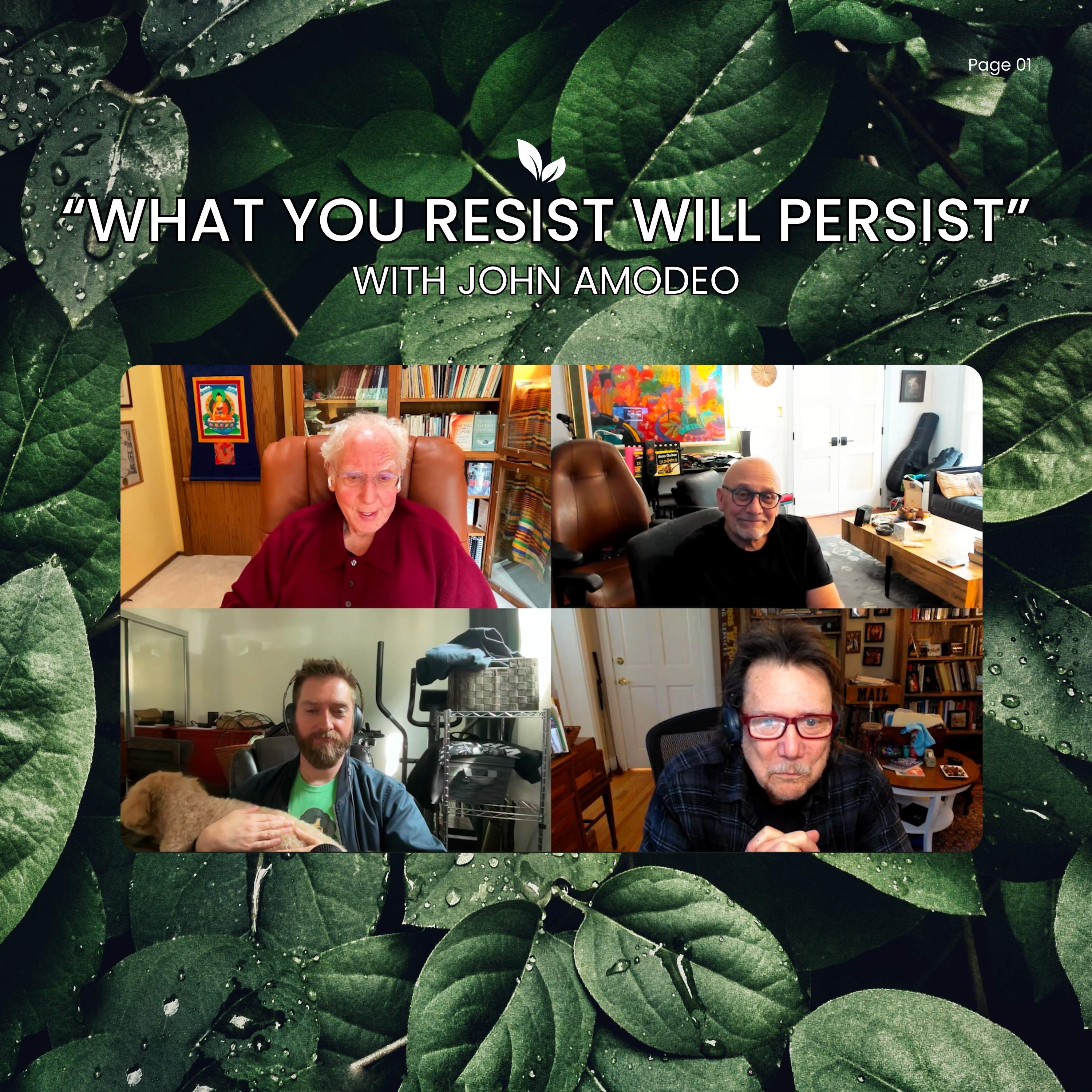
What you resist will persist.
And if we don't open to these feelings. But the key is to. Is to bring gentleness and kindness and caring to the feeling. And one way to do that is to get out of our head and just drop down into our body, into our being and notice. How do these feelings live in our body? You know, is our stomach tight? Is our chest constricted? Is our throat tight? Are we bracing inside, tensing? And if so, that's fine. That's natural. Just notice it. Be aware of it. Just be curious about what you're experiencing. Okay. Yeah, I'm really tightening. I'm afraid of this feeling. I'm afraid going to get me into trouble. I'm afraid it's never going to end. Okay, well, is it okay to be with that fear that it's never going to end? It's going to go on and on? That may not be the reality, but I understood. But I hear that that's a fear that you have.
Let's just be with that for A moment. You know what's so scary about this?
[00:04:51] Speaker B: What if someone, when they do that, they find themselves resisting what they're experiencing? John, what path would you take them on at that point?
[00:05:00] Speaker C: Well, I'd honor the resistance. Sometimes in therapy, resistance is a bad word. Like we're not supposed to resist.
But I see it as a doorway. Just. Okay, let's just notice what gets in the way of being with that fear, with that sorrow, with that grief, you know? What are you afraid you know might happen? Well, I'm afraid it's going to go on and it's never going to end. Has that happened where you've been opening to the feeling and it's never ended? No. Okay. Well, we don't know. You don't know when that's going to happen? It could be the opposite. It could be that you get some relief by opening to the feeling that you normally are pushing away.
So how would it be if we both. And then being with the client, you know, as a therapist, and I'm sure you and Tom do, you know, it's really being present with him, making a safe place. Because often we don't want to be with our feelings because we're so alone with them. We're so isolated.
And the isolation is really the scary part. Like, I live so alone with this.
So extending our gentle presence to the client or to a friend or to a partner who's hurting. And being with them makes it emotionally safer for them to open to what they're feeling.
[00:06:01] Speaker B: Yeah.
As you're sharing this, I'm remembering the session I had with you when I was going through the divorce with Jess and all the pain I was in at that point, and I felt so alone.
And I remember what we ended with is that I was able to feel the presence of my father behind me.
And it was so helpful to feel embraced by him and held by him at a time where I felt so alone and in so much pain. And you. You know, I remember the session. You guided me to that in such a wonderful way. It was very, very helpful.
[00:06:39] Speaker C: Good to hear. Good to hear.
[00:06:41] Speaker B: Yeah. It really meant a lot. And, you know, I had an experience with Tom, too, is. I recall. You know, I share this a lot because it was also so meaningful. I was telling Tom about how dark I felt, and he says, okay, just imagine you're walking down this. This dark corridor. You don't. You can't see anything in front of you. And he says, way ahead of you. I'm on a. I'm on some corridor that's on a right angle to where you're at. And where I'm at, there is some light, but you can't see that. He says all you can hear is my voice. He said, keep walking towards my voice.
And that had a big impact on me, too, John. That was really very touching. And it made me feel a lot more strong, beautiful.
[00:07:25] Speaker C: Because, you know, there's an epidemic of loneliness in our society that's well documented. You know, people feel so alone and isolated, like we don't have a sense of community, like I think some of the cultures do. Like in Thailand, where I was recently, people feel more connected to each other.
So, yeah, to be able to reach out, take that risk. People want to be vulnerable with people who we feel safe with or who we might feel safe with or who we'd like to feel safe with. Take that risk, to open and see how we're received and. And often people are open to being with us. You know, we gotta find the right people. We have to have boundaries, not just open our vulnerable heart to everybody. But, you know, we feel kind of reasonably safe. We take a little bit of a risk, and we trust. We sense that I feel safe to do that. I feel heard, that I feel received, that I feel respected rather than shamed or judged or criticized. And if we feel safe, we can open a little bit more. We can let in.
This is a big thing I write about, too, the art of receiving. We can let in people's kindness and caring and presence. Often we have blocks to receiving, which is a big obstacle to feeling more whole and more connected and more healed.
[00:08:32] Speaker D: You asked the question simply, what seems to be in the way? And I love that. I mean, there's something about that that just is so practical, you know, and it's like. And not threatening to anybody. It's like. I love that way of the way you said it.
[00:08:50] Speaker C: Yeah, great. Thanks. Yeah, yeah. What gets.
[00:08:52] Speaker D: Because there's, you know, because if. Because there it is there. There's just something in the way. That's all it is.
[00:08:57] Speaker C: Exactly right. And that's something needs attention.
It needs your presence. It needs your loving kindness. It needs you to turn toward it instead of away from it.
Not be afraid of it, or if you are, then be with the fear of it and open. Open that up a little bit more. Unpack that. What. What is that fear? You know, maybe there's some earlier roots to it. Maybe maybe this childhood issue is connected to it, or maybe something happened recently in a partnership or in your life where you're just really afraid to feel.
[00:09:29] Speaker A: John. I love the explorer Susan Jeffer says.
[00:09:32] Speaker D: Feel the fear and then do it anyway.
[00:09:34] Speaker C: Right? Yeah. Your courage isn't the absence of fear, it's acknowledging our fear and acting anyway.
Exactly right.
[00:09:45] Speaker A: Being in the presence of the fear.
[00:09:46] Speaker C: Being in the presence of the fear. And sometimes we have this image of this version of ourself. We think we have to be like strong, you know, and tougher.
And strength doesn't mean not being vulnerable, just the opposite. It's the courage to be vulnerable that's real strength.
[00:10:02] Speaker A: So how can you have that gentle presence but still maintain boundaries where necessary? Like boundaries and presence. Like, like how does that paradox resolve?
[00:10:14] Speaker C: Yeah, that's a good question. I have a whole chapter on boundaries in the book Boundaries or often become walls for people. Boundaries are different than putting up walls. Separation. Like some people, they kind of wear their boundaries on their sleeve where they pride themselves on being a strong person or having limits or telling it like it is, you know, and, and often they think they're being authentic, but they're really being obnoxious.
You know, I have a chapter about that. The difference between.
[00:10:45] Speaker B: There's a chapter, I'm the most, I'm.
[00:10:48] Speaker A: The most authentic person here. I'll just tell everyone.
[00:10:52] Speaker B: That was very right.
[00:10:53] Speaker C: Exactly. So I have a chapter on being authentic without being obnoxious, without being aggressive.
And you know, bringing gentleness to what we're feeling enables us to set a boundary with more kindness so we can hold the well being of the other person while also not ignoring our own needs. We can express our needs, express our feelings. What we need, what we want, what we don't want. But we can do it in a more kind way. And if we do it in a more kind way, we're much more likely to be heard rather than rejected or stonewalled or pushed away or been seen as an aggressive, obnoxious person. I'm not going to hear you, you're just abusing me.
The more we can do it in a kind, gentle way, the more likely we are to get heard. The more likely it is that things are going to go well. The more likely it is that the communication will real and connecting and productive.
So yeah, it's so important to have boundaries in our life, you know, to know what we feel, what we need, what we want and not be at the effect of other people's reality, not be controlled by other people, manipulated or I think we have to comply with what others want in order to be loved.
We can be our authentic self and we're more likely to be loved for who we are rather than for who we think we need to be.
[00:12:11] Speaker B: Yeah.
[00:12:13] Speaker D: So often boundaries are off. They kind of are offensive. They. They would go on the offense instead of just being. Well, to use your word, gentle.
[00:12:23] Speaker C: Right.
[00:12:23] Speaker D: Boundaries don't have to be rough.
[00:12:25] Speaker C: Exactly. Exactly. Yeah. I think if we really know we have a right to set a boundary, we can do it with more kindness. I mean, it's hard to integrate those two.
Assertiveness with kindness. I think that's the key.
Having boundaries, saying being able to know our yes, to know our no, and also not neglecting what I call the power of maybe. You know, somebody wants something from you, right to the airport or whatever, they want you to do something for them.
Pause. You know, go inside, take a moment. You know, does that feel right for you? You don't have to say yes or no right away. I have a lot of clients who feel like they have to immediately know and give a response. But the power of maybe means. Well, let me sit with that. You know, I hear your request. Thank you for asking. And not sure and how that. I gotta just check in with how that feels and, you know, maybe check in with my partner to see if I have the time to drive you to the airport or see what our schedule is. You don't have to know the answer. You know, not knowing. Embracing not knowing is really helpful.
There's a famous Korean Zen master who talks about don't know mind. You know, just to keep. English wasn't very good. He would just say, just don't know. Just keep don't know mind. You don't have to know everything.
It's very freeing.
I have a client we worked with that recently. He just said it was so freeing just to be able to say, I don't know, you know, because often men, especially conditioned, have to know everything, know all the answers. Be, you know, be the strong person who can solve problems and fix everything.
[00:13:52] Speaker A: You know, I have trouble. I've been doing this podcast with Alan and Tom for a while, and.
[00:13:59] Speaker C: I.
[00:14:00] Speaker A: Part of my difficulty in being able to do this form is just being able to talk at length. And talking at length is easier when I believe I'm speaking from some position of authority. And the difficulty is, you know, I.
I have no authority or very little authority. You know, like, I can re. I read. I read and I try and study and kind of be up on things, but I think just that fear of being able to express myself without having this kind of, like, absolute authority over that which I'M talking about, it can paralyze, you know, the throat and. And I feel like when I can talk better, when I operate from a position of not. No, I don't need to have this absolute quote unquote, authority over. Over everything. I just need to be able to flow and also kind of like, understand.
Understand my not knowing and be okay with it and kind of forgive myself for it and just go.
[00:15:01] Speaker C: Beautifully said. And one thing I would add is maybe you could embrace the authority of your own experience. Like, you know what your experience is in life, what your experience has been. You have authority over that, and that's enough to have authority. You don't have to have credentials or degrees or whatever to have authority. You have authority over your own life experience, your own humanity.
Just a thought to add to the mix.
[00:15:27] Speaker B: It's a great thought.
That's so true. I was thinking along the same lines, John, that you do have that. Patrick, the word gentle really jumps out at me.
I'm aware sometimes I have such a strong critic inside of me and that when I make a mistake, I start to really, you know, either beat myself up or shame myself for the mistake or criticize myself, you know, very harshly.
And, you know, I was doing some reading the other day and I was reading some of Dr. Nathaniel Brandon's work on self acceptance, and it was very interesting. John, he was talking about there's. There was several different levels of self acceptance, right. Like the first level being being on our side, right. Having a refusal to have an adversarial relationship with ourselves. And then the second level was just accepting everything that's a part of me is me, and accepting all of that, and not necessarily that I feel good about some things if I'm cruel, but I can be cruel at times. And accepting that, that's part of me too.
He says, but the third level is to have compassion for yourself and those mistakes or those parts of you, and that to be able to not excuse yourself for it. It's not to give yourself an alibi. Right. Or to, you know, somehow deflect responsibility or not take responsibility.
It's too.
But deeper understanding of yourself.
And he says that we do something that we don't feel if we understand the context for us, we can have an understanding, a deep understanding of who we are and what are the forces operating within us, which he says can be very valuable in terms of understanding ourselves and in becoming what we want to be or what we can be.
[00:17:29] Speaker C: Yes.
Beautifully said. Yeah, we, you know, we all have this inner critic. It's a part of all of us. It's a universal kind of a thing. And we all make mistakes. I talk about him in this book.
You know, Benjamin Frankl was famous for having said, there's only two certainties in life, death and taxes. And my response to that has been, why so optimistic? You left something out, which is making mistakes.
The other one I talk about later in the book is betrayal is another given in life. We're all going to feel betrayed at some point.
So we all make mistakes. Just part of being human, and it's okay, you know, we need to embrace it. And the good news is we can learn from our mistakes, you know, if we brace against it. If we, if we're trying to be a person who's perfect and never makes mistakes, well, you know, perfection.
Trying to be perfect is usually shame driven. Like, if I can be perfect, then no one can ever shame me again.
[00:18:22] Speaker B: So.
[00:18:22] Speaker D: Well, that's gotten, that's gotten so 180 degrees turned around in my recovery, so I would have never seen this coming. And, you know, the willingness to be wrong is power.
I mean, personal power, not power over anybody. But it's like, you know, as long as I know that, and it's one of the things Roger Andes and I make jokes about this, that we need to not be, we need to be careful not to get too, too proud of our humility, you know, and, and, but, but the idea is that I do feel good about that ability to, to.
And it frees me up with what you're talking about, Patrick, to basically just, you know, do what? To take the risk of saying what I feel is I want to say and follow my own guidance with that and realize it really is no longer a problem for me if somebody, if I, if I figure it out or somebody points it out that I've said something that's inaccurate or not useful or something like that, because I can deal with that and I can learn from that.
[00:19:22] Speaker C: What John is saying, don't have to keep defending yourself. Right.
To be so right.
[00:19:27] Speaker D: It just, it just. And basically, I mean, you really can't learn without messing stuff up.
[00:19:34] Speaker C: Totally, totally. And, and it's okay to also have, you know what, what I call healthy shame around. You know, if we do make them, if we just say, we just. If we do something really hurtful to somebody, for example, I mean, there's toxic shame and then there's health. Healthy shame, what some people call guilt, I prefer to call it healthy shame. You know, it's just simply recognizing that you've Violated someone's boundaries, you said, or done something hurtful, which we all do. It's unav.
And we pause and we go inside and say, oh, yeah, I'm sorry. I. I didn't really get, you know, I didn't mean to do that.
You know, appreciate you telling me I can learn something from that or how can I correct it? You know, how can I make. There's some way I can make amends or make up for that and, and to learn from it so we minimize the possibility of repeating it. We may repeat it, but we keep learning from our ongoing mistakes. It's okay. It gives us so much freedom just to be willing to make mistakes and, and instead of being critical of ourself about it, just realize, you know, we're part of the human condition. It's just part of being human.
[00:20:36] Speaker D: Well, you bring up the healthy shame. It's like, just tell me if this fits to that too. Also, because I, I just think in terms of, of learning to have a healthy relationship with feelings. It's like healthy feelings are communication and they, they guide us. So basically, healthy, healthy shame will put us. Will correct our course. You know, so if I, If I'm. If I bump into you really hard as we're taking a walk and I. And I didn't mean to do that, then basically I'll stay on my side of the sidewalk a little bit more, and then that shame dissipates because it's. It's job is done. It's like the, the toxic shame you're talking about. It's just stays with.
[00:21:16] Speaker C: Exactly. Right. Yeah. You know, I think Bradshaw says it's a difference between I made a mistake versus I am a mistake.
He'll contrast shame and guilt. Shame is I am a mistake. Guilt is I made a mistake. And we just need a little bit. Little bit of that guilt or a little tiny bit of the healthy shame to get our attention. We don't need to wallow in it or beat ourselves up for it. Just enough to get our attention. Oh, okay. I bumped into you taking the walk. Okay. I'll be a little more careful.
Sorry. It doesn't have to be a big deal.
[00:21:47] Speaker A: John. I thought I'd ask.
So you, you are drawn to this concept of gentle presence, and was there a time when that presence was not accessible to you? And is that what drove your curiosity about it? Is, you know, how do I hack this presence and I'm unable to?
[00:22:08] Speaker C: Well, yeah, for a long time, you know, growing up, I.
I didn't know that word was Just a totally foreign word. I wouldn't know what presence is. I didn't know what feelings were growing up, you know, nobody was. Was mirroring my feelings. You know, one was interested in if I was sad or hurt or angry or felt embarrassed. So I just learned to suppress all my feelings. I didn't know what they were until I joined in college. I talk about this in my book, actually. So I joined what's called the sensitivity group where everybody was talking about their feelings. And it was like, whoa, it's a foreign language to me. Like feelings. Oh my God. I was just quiet, throwing most of the group. But I absorbed a lot and I got the message. Wow, this is. I really. This is a good thing to do. Is this. Or is this okay to do Opening the feelings? My good.
And then I finally took the risk once to share my feelings with a friend in the cafeteria. Once when this woman broke up with me, I was really devastated. It was really sad. And I was telling him how sad I was. I was crying and he was there and he listened. And the world didn't end. It was okay to have my feelings and share them.
So I learned that it's okay to be present with your feelings and share them. And it actually creates more connection in our relationships. That's one reason people feel so isolated. They're keeping everything inside. They're not sharing their authentic feelings with each other. They're keeping all that stuff inside. So that's a really key to intimacy. Creating community is for us to feel more safe with each other, emotionally safe, to be open and to share feelings with people who accept us and appreciate us as we are.
[00:23:38] Speaker D: That aloneness or even that emotional isolation is just so normalized in our culture that it's like that. It is, it is. Very often we need to remember foreign or even alien when you start to talk to somebody about opening. And that's one of the things I have to remember as being somebody who's been on this path for a long time, that I'm. That I'm. That I need to be. I need to be cautious and be aware of who I'm talking with.
Because I may. I may be asking too much of them. If it's just like, no, no, tell me what. Tell me the feeling, you know, just give it to me. Instead of helping people find their way in.
[00:24:15] Speaker C: Yeah, I think we have to be a little selective, you know, sharing our feelings because we share vulnerable feelings with somebody who just doesn't get. Just totally rejects us who says, oh, why do you feel that way? What's wrong with you? We're going to shut down again and be convinced. Oh, yeah. You see, I shouldn't share my feelings with anybody. I should just keep everything inside and stay isolated. So you've got to be a little bit selective, but don't give up. There's always this. There are people out there, like, in the groups that you guys lead and, you know, and therapists usually are very good at listening to our feelings and accepting us as we are. And.
[00:24:45] Speaker D: Well, with hindsight, I think what I realized is, is I didn't want to be around people with. With who were expressing really open and. And impactful feelings because it was almost like I was. I was. It felt like their. Their bombs were going off and I was strapped with a bomb on me, and I didn't want. I didn't want to get bumped into and I didn't want. I didn't want, because if I was around that, then basically I would start feeling.
[00:25:10] Speaker C: Imagine that. What a concept. Yeah.
How horrifying.
[00:25:15] Speaker D: And like you say, only with hindsight. But I was going like I was just scared to death when I was around people who were really good with communicating feelings. So I like your point about be cautious and be, well, gentle. Gentle presence.
[00:25:30] Speaker C: Yes, exactly. Yeah, same for me. I was scared by other people sharing their feelings. I would just shut down and get frozen inside.
But, you know, this is why we stay isolated. We're in such an isolating society. Most people are physically keeping everything inside and not willing to share. So, you know, it takes courage and a willingness to risk means it could go well. Maybe it won't go well.
We don't know until we try. But, yeah, be a little selective, be a little careful.
But then you really kind of find out who your friends are, you know, who's really there for you, who can really feel you and be with you, present with you. And what a gift. I mean, that's the most precious gift in life, I think, is to have friends, have people who can really be with us and accept us as we are and hear us and mirror back who we are, our feelings, our beauty, our goodness of who we are.
Because we didn't get that. Many of me didn't get that mirroring growing up. And that's part of our healing now, is to get that mirroring from safe people now in our life.
[00:26:31] Speaker D: So important.
[00:26:34] Speaker B: Boy, John, it sounds like a wonderful book. Sounds so good.
I'm going to order a copy as soon as we come off the podcast.
[00:26:41] Speaker A: Yeah, me too.
[00:26:42] Speaker C: Thank you. Appreciate that.
[00:26:43] Speaker B: Yeah, it's Fun.
[00:26:44] Speaker C: Yeah. I feel. I'm feeling really good.
[00:26:45] Speaker B: And there's so much overlap with emotional sobriety. I mean, what you're talking about is really how to be present with ourselves and soothe ourselves and be able to support ourselves. Because, you know, we describe an emotional sobriety that.
That we move away from environmental support. Right. Looking for environment to make us feel okay, to learning how to support ourselves. That doesn't mean to be a rugged individualist or a defiant individualist. It just means I take responsibility for what I need.
And if I need support from someone, I take responsibility to talk to someone and try to get it from the right person.
And, you know, if it's not available, to see what I can do, to give it to myself.
[00:27:28] Speaker C: Perfect. Yeah. Perfect. Yeah. It really ties into emotional sobriety. Yeah. I was reminded. Yeah. Thank you for bringing that up.
Because, you know, the sense of isolation that we all. That many of us feel is loneliness. I talk a lot, a lot about loneliness in the book.
You know, it's such a painful feeling, that isolation, that we turn to various addictions to soothe the pain, to soothe the discomfort. Right. And it could be drugs, could be alcohol, could be television, could be spectator sports, could be food.
So many. It could be our thoughts, you know, getting attached to our beliefs and our convictions. So many things we get addicted to and hold onto. And it separates us from each other.
And so, you know, part of healing addiction is moving toward more emotional sobriety, meaning being. Opening to the full range of our feelings with loving kindness and acceptance and gentleness with gentle presence and being with that and sharing it with selected others.
And one other point. Stop me if I'm talking too much point you just made. Alan, is this next book. I'll be working on it. It's got three parts to it. It's tentatively called the Three Pillars of Love.
One is what we need to get from a relationship. The other is what we need to give to a relationship. And then the third important part is what we need to give to ourselves, which is what you're saying, standing behind ourselves. Cause we don't always get what we want from another person. And we need to be present and loving and kind to and find things that nurture us, maybe apart from a relationship or apart from a partnership. You know, we need other friends. We need things that are meaningful for us in our life. Making a contribution to other people, to society. Finding happiness through serving, being of service, finding joy.
[00:29:10] Speaker B: And that's gonna be great book. That really is gonna be a good book. Yeah, yeah.
[00:29:15] Speaker A: And it's not too late just to anybody, to anybody listening who, you know, has been stuffing their emotions for quite some time. I, I think I was doing that for most of my life and then it's been a crash course and you know, finding some measure of that presence. But it's. Those tools are available, you know, if you have the desire.
[00:29:35] Speaker C: Appreciate you saying that, Patrick. Yeah, because, you know, I mean, I know what it's like to live a life where you're just suppressing your feelings and a lot of. And I'm not perfect at it even now. I'm still working on it. It's a lifelong process. Right. But yeah, people can find, you know, friends to share with, groups that are safe. Therapists, a coach who can help you open to your feelings and learn more about yourself, be more accepting and loving and kind toward yourself. Those are wonderful things to be able to do for yourself. Important part of self care. Finding a place where you're safe to really be you.
A good, important corrective for growing up in situations, families where we weren't seen and loved and accepted as we are.
And that's the good news. There is hope. We can change, we can grow.
I feel like if I did it, most people can probably do it too.
[00:30:29] Speaker D: I say that too sometimes, John. Like, look, man, if I, if I can pull this off, I mean, you can do it. But you know, you said something else. You said something that really makes me. I mean, get to the place where. And Alan, I give you. I mean, probably others have contributed, but. But I'll put you at the head of the list of credit for this is what.
What I one a piece I've gotten from emotional sobriety and that. Is that what John was talking about? All of all the variations of, of addictiveness that. That show up. It's like, you know, I've. Because for the longest time in my recovery, I used to, I used to say you shouldn't have to have an. You shouldn't have to have a defined addiction as a ticket at the door to get. To get into this place because this is this, you know, because I always remember my first sponsor told me there's 12 steps of. Of. Of a a and. And he says only one of them mentions alcohol. He says the rest of them are about how to be a better person, how to be better in. In your life. And that's what I love about emotional sobriety. Is it. It is the big A. I mean, it's like, it's like. Yeah, it is the same process. I mean, there's content differences, but the same process, if you're just even like what you said, even just lost, addicted and attached, you know, it's still, it's still you. You gotta.
You identify that dependence.
[00:31:51] Speaker C: Right? Yeah. People often get attached to their. Their idea. I love.
[00:31:55] Speaker D: It's just, it's just so helpful to me and I watch it be helpful to other people. It's just. I love it.
[00:32:01] Speaker B: I use a lot of what you write about in terms of relationship, John. When I present about emotional sobriety and relationships. And one of the quotes I'm using recently, there's so many of, you know, things you say that have so much wisdom to them. But one recently was this idea of if we confuse longing with love, we're going to enter into a relationship with dependency.
And that love and longing are two very, very different things.
And to differentiate the two becomes very, very important.
And so that was one thing you said and then the other thing you had this book about. You know, when we go into a relationship, the more the way we describe it now, John, in emotional sobriety is having an appropriate and honest relationship with reality, which means the reality of a relationship. And the way you said this one thing in this one book that says every relationship is going to have disappointments. You're going to have heart, you're going to have struggle, you're going to have all these things. And you said something about if you don't expect things and then you start objecting to these, that things are happening, you're going to miss the opportunity here.
Being in love means learning how to deal with these things with your not to not let them become reasons to be alienated. And I'm paraphrasing what you said, but it was so present this because people start to see a whole different vision of what trouble means, that it doesn't mean something.
[00:33:34] Speaker C: And it doesn't mean I missed that and it doesn't mean.
[00:33:38] Speaker B: That something's wrong. Right. That that's something wrong with your relationship. It's part of what it is. It's how we deal with it that becomes the important issue. And I just love how you highlight that. Beating self up and taking responsibility.
[00:33:53] Speaker C: If we keep blaming ourselves, then of course we're not going to take responsibility because we're going to be so immersed in toxic shame that we don't want to get close to taking any responsibility because immediately we feel shame like, oh, what's wrong with me? So we don't want to feel that well.
[00:34:07] Speaker D: And blame stops us building encourages to go forward. Blame is I Always say it's like an anchor on a boat. It's like you drop the anchor, man, you're not going anywhere, you're just going to circle.
And, and, but that, that's such a big distinction to make. And I got to remember I used to not know the difference between those two. I thought blame was responsibility.
[00:34:30] Speaker C: Right.
[00:34:31] Speaker B: Well, I think in our culture we got this Judeo Christian idea that if you beat yourself up, flagellate yourself enough, you've made penance. Right. You've paid your dues. And it's not, you know, it's a, you know, Fritz Pearls used to call it a futile self improvement game. You know, you beat yourself up thinking you're doing something about it, but you're not learning. As you said, John, that learning from our experience really becomes the thing that we recover in the coverage is the ability to learn from our experience rather than being stuck in it.
[00:35:04] Speaker C: Exactly. Learn from our experience. Take responsibility for when we've been off the mark. You know, the actual meaning of the word sin means missing the mark.
Missing the mark.
[00:35:15] Speaker B: Wow.
[00:35:15] Speaker C: And we don't miss the mark. Sometimes it's okay, but we don't. But I grew up Catholic. We don't have to immerse ourselves like we're sinners, you know, we're bad and just kind of hold that as our identity.
[00:35:25] Speaker B: Just missing the mark. I love it. That's a great, that's a great way to describe it. I love it. Yeah.
[00:35:30] Speaker C: And we, we all miss the mark all the time. It's okay. It's just part of being human and, but we can learn. We can take responsibility for how we were off base or how maybe how we hurt somebody, how we hurt ourselves, and, and we learn and we grow from it. But yeah, if we're paralyzed by blame, we're not going to be open to learning from the experience. We're going to be shut down. We're going to have get stuck in arrested development. We're not going to grow. So, yeah, we need to be gentle with that part of us.
[00:35:54] Speaker D: Well, we don't know that we're here to do that. I mean, and I don't know what the meaning life is in the, in the, in the back of the book. But what I do know is that when I choose to, to proceed with a, with a chosen belief that, that I am here to learn, that I'm, I'm a very, I'm very much productive when I'm doing that. Because, because, because on my worst day, there's lots to learn.
[00:36:20] Speaker C: Life, Life is a school.
[00:36:21] Speaker D: It's like sometimes there's more to learn. On my worst day. Yeah.
[00:36:24] Speaker B: School's in session today. Everybody that's listening to this podcast, you are having a lesson. My wife, Donna Amodeo, from Tom Rutledge, Alan Berger, and Patrick Newton John's the.
[00:36:34] Speaker A: Cool substitute teacher who wheels out the tv.
[00:36:36] Speaker B: He's a great substitute teacher. We'll take him anytime.
[00:36:50] Speaker C: Sam.